finance
Oil Surge and Tech Selloff Put Thailand's Export-Driven Economy in the Crosshairs
A sharp rally in crude prices and a bruising session on Wall Street are combining to squeeze the margins that underpin Thailand's manufacturing and tourism recovery.
How we reported this
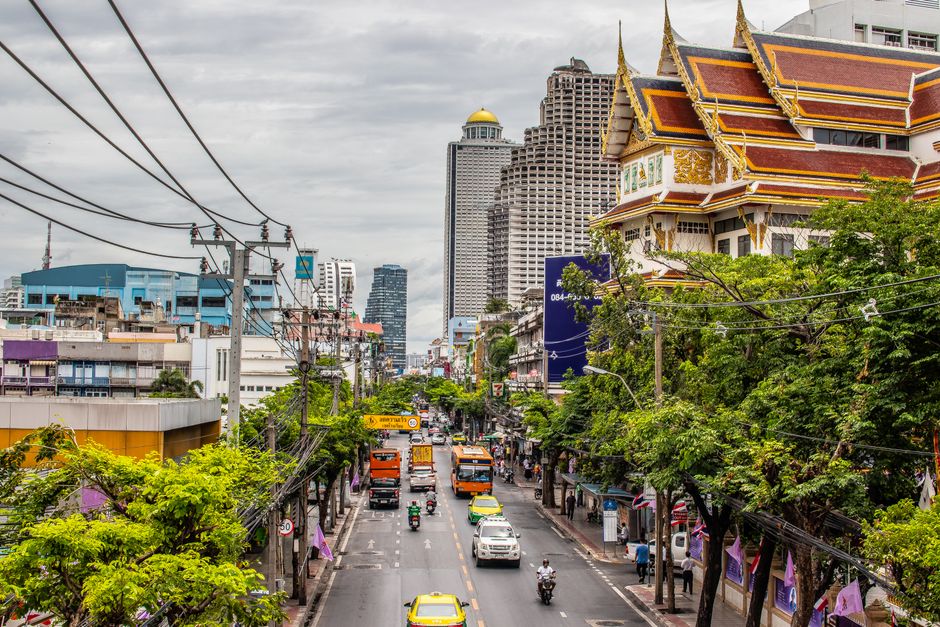
For an economy that runs on imported energy and outbound tourist spending, the session that just closed carries an uncomfortable message for Bangkok. Brent crude surged 4.59% to US$88.10 a barrel and WTI crude climbed 3.58% to US$81.78, a jump large enough to ripple through airline fuel bills, logistics costs and the petrochemical inputs that feed Thailand's industrial estates from Map Ta Phut to Rayong. At the same time, the technology-heavy Nasdaq dropped 2.85% to 25,520.24, a reminder that the global appetite for risk is narrowing precisely when Thailand needs foreign capital inflows to stay robust.
The crude move is the headline number Bangkok boardrooms will be watching most closely. Thailand imports the vast majority of its oil needs, meaning a sustained rally in Brent and WTI feeds directly into the cost base for carriers like budget airlines, freight operators and the energy-intensive factories that manufacture electronics and automotive parts for export. If crude holds near these levels, the pressure on corporate margins could show up in earnings guidance before the quarter is out. Consumer fuel prices, already a politically sensitive subject, will also come under renewed scrutiny.
Wall Street's Tech Rout Sends a Cautionary Signal to Regional Portfolios
Beyond energy, the broader equity picture gave investors little comfort. The S&P 500 fell 1.51% to 7,457.69 and the Dow Jones slipped 0.97% to 52,146.42, but it was the Nasdaq's near-3% drop that set the tone. Thailand's technology and digital economy ambitions, including the government's push to attract data-centre investment and semiconductor supply-chain relocations, are tied at the hip to sentiment in the global tech sector. When valuations compress sharply in San Francisco and Austin, the appetite for greenfield investment in Southeast Asian tech hubs tends to cool alongside them.
Regional markets reflected the unease. The Nikkei 225 in Tokyo bore the heaviest losses, tumbling 4.03% to 64,141.12, dragged down by yen dynamics and its own outsized technology weighting. The Hang Seng fell 0.48% to 24,562.24, while the Straits Times Index in Singapore declined 0.90% to 5,509.43. Europe was more mixed: the DAX eased 0.67% to 24,830.98 and the CAC 40 slipped 0.47% to 8,338.81, while London's FTSE 100 bucked the trend with a 0.80% gain to 10,600.37, supported in part by its own heavyweight energy constituents benefiting from the oil rally.
Gold's advance offered the clearest read on prevailing sentiment. The metal rose 0.83% to US$4,018.80 an ounce, holding firmly above the psychologically significant four-thousand-dollar level. Silver added 0.77% to US$56.33. For Bangkok-based investors with allocations to precious metals, either directly or through funds with commodity exposure, the move is a net positive, but it also signals that institutional money is seeking shelter rather than chasing growth. Platinum, by contrast, slipped 1.42% to US$1,612.50, and copper eased 0.49% to US$6.265 per pound, the latter a useful barometer of expectations for industrial demand globally.
In the digital asset space, moves were contained relative to the volatility elsewhere. Bitcoin edged up 0.12% to US$63,974.11, Ethereum gained 0.17% to US$1,844.04 and BNB rose 0.35% to US$569.73. Solana slipped marginally to US$74.95 and XRP dipped 0.07% to US$1.0879. Thailand's retail crypto participation has grown steadily in recent years, and the relative steadiness of major tokens during a rough equities session may offer some reassurance, though analysts broadly caution that correlation with risk assets tends to rise sharply during sustained downturns.
Natural gas rounded out the energy complex with a 1.85% gain to US$2.911, adding another layer of input-cost concern for industries reliant on gas-fired power generation. Taken together, the session presents Bangkok investors with a familiar tension: energy-linked assets are performing, but the growth-sensitive equities and industrial metals that signal confidence in the real economy are under pressure. How that tension resolves over coming sessions will matter considerably for a Thai market that needs both stable costs and confident foreign participation to sustain its post-pandemic momentum. This article is general information only and does not constitute personal financial or investment advice. Readers should consider their own circumstances and seek advice from a licensed professional before making any financial decisions.