news
Bangkok's Old Neighbourhood Districts Face a Fork in the Road, and the Decisions Can't Wait
From Banglamphu to Thonburi's riverside lanes, community leaders and city planners are running out of time to agree on who gets to stay and what gets torn down.
How we reported this
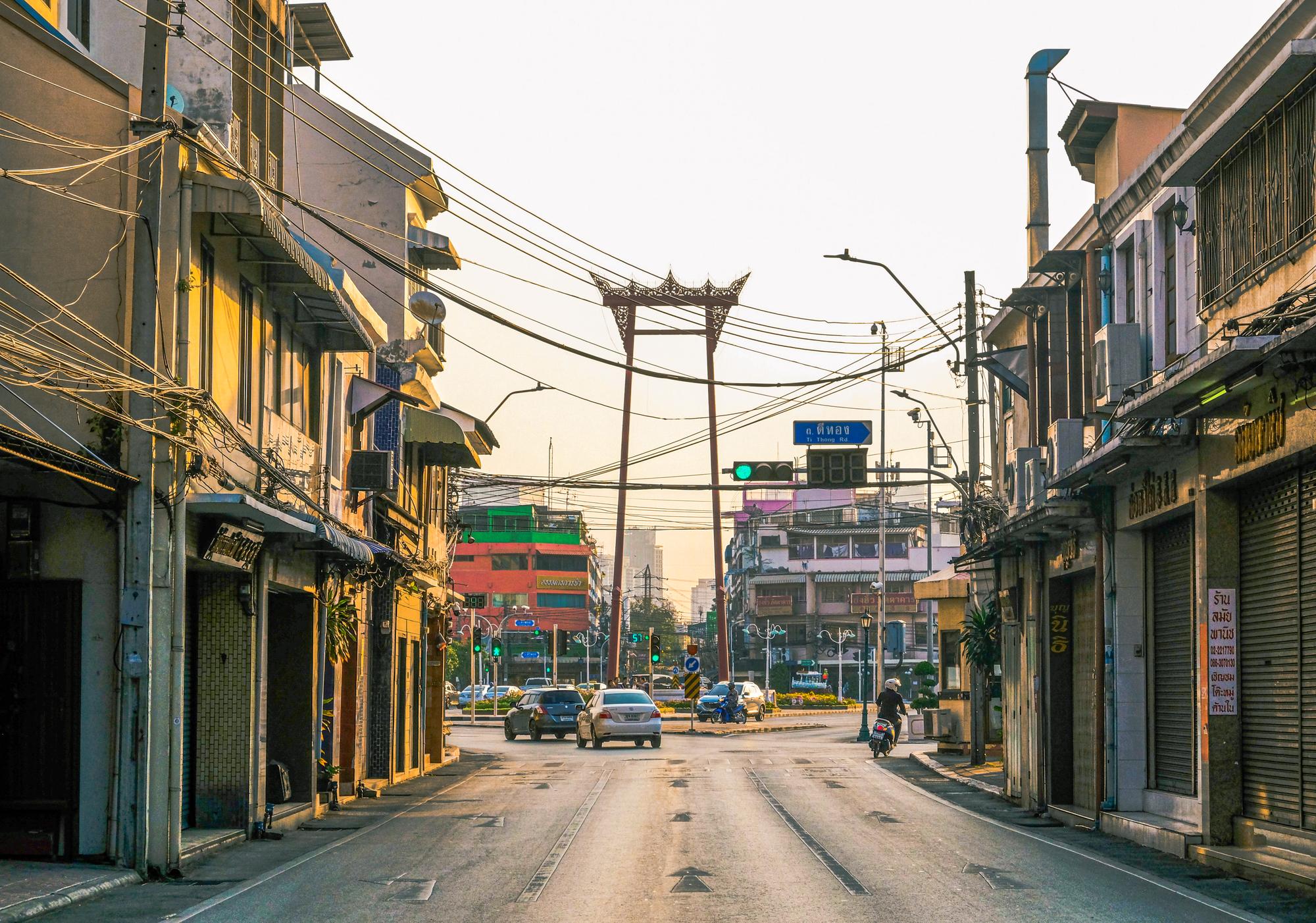
Bangkok's District Offices are sitting on a stack of unresolved zoning petitions that will, within the next 90 days, determine whether dozens of long-standing communities in the inner city survive the next wave of high-rise development or get quietly absorbed into it. The Bangkok Metropolitan Administration confirmed this week that the revised city plan, the fourth update since 2013, enters its final public comment window on August 15, after which amendments become legally binding and essentially irreversible for another decade.
The timing matters for reasons that go well beyond paperwork. Tourism arrivals hit a record 11.4 million visitors in the first five months of 2026, according to the Tourism Authority of Thailand, and hotel developers are using that data to justify new projects in neighborhoods that have never before dealt with eight-storey construction on their doorsteps. The commercial pressure and the regulatory deadline are converging at exactly the same moment.
Banglamphu and the Battle Over the Buffer Zones
Nowhere is this felt more sharply than in Banglamphu, the tangle of lanes behind Khao San Road where families have rented shophouses for three and four generations. The BMA's draft zoning map reclassifies a strip along Phra Athit Road from residential-mixed to commercial-4, which in practice removes height restrictions and opens the area to hotels and serviced apartments. Residents' groups, coordinated loosely under the Rattanakosin Community Network, have until July 31 to submit formal objections, a deadline most of the 200-odd households affected say they only learned about in the past two weeks.
The pressure is similar across the river in Thonburi, where the Kudi Chin community near Wat Kalayanamitr has been navigating a separate but related conflict over the Chao Phraya waterfront development program. The BMA's riverside promenade extension, which has already transformed stretches of the east bank between Saphan Taksin and the Memorial Bridge, is now proposed to continue on the Thonburi side. That would require clearing a row of wooden houses whose occupants hold 30-year lease agreements with the Crown Property Bureau, agreements that expire in 2029 and are unlikely to be renewed on the same terms.
What the Numbers Actually Show
A survey published in June by Chulalongkorn University's Urban Research and Innovation Center found that average monthly rents in the Banglamphu-Samsen area rose 34 percent between 2023 and 2026, from roughly 6,500 baht to around 8,700 baht for a standard 30-square-metre unit. Shophouse rents along Tanao Road, a short walk from the Grand Palace, have climbed even faster, pushing out several family-run printing and fabric businesses that had operated there since the 1980s.
The digital nomad community, which the TAT estimates now accounts for roughly 8 percent of long-stay visitors, is concentrated disproportionately in these older districts, drawn by cheap rents and walkable street life, the very qualities that evaporate once commercial zoning takes hold. Co-working operators on Mahannop Road and around Tha Phra Chan report waiting lists, even as landlords in those same blocks are fielding buyout offers from hotel development firms.
The BMA under Governor Chadchart Sittipunt has publicly committed to a heritage-overlay policy that would give communities tools to resist blanket upzoning. But as of this week, the overlay maps have not been published, and urban planners say three districts, Phra Nakhon, Bangkok Yai, and Khlong San, still lack the local planning committees required to apply for heritage status under the 2024 Cultural Heritage Zoning Act.
What happens next hinges on a few specific actions. Community groups in Banglamphu need to file objections before July 31. The BMA must publish the heritage overlay maps before the August 15 comment window opens, or they become irrelevant to this planning cycle. And the Crown Property Bureau must signal, before year end, whether the Kudi Chin leases will be renegotiated or allowed to lapse. Each of those is a discrete decision with a real deadline, and missing any one of them makes the others considerably harder to fight.