news
Bangkok Officials Warn of Surging Fake Images Flooding City's Digital Archives
From government press offices to Silom hotel chains, duplicate and AI-generated images are flooding Bangkok's digital infrastructure, and the people responsible for fixing it are finally speaking up.
How we reported this
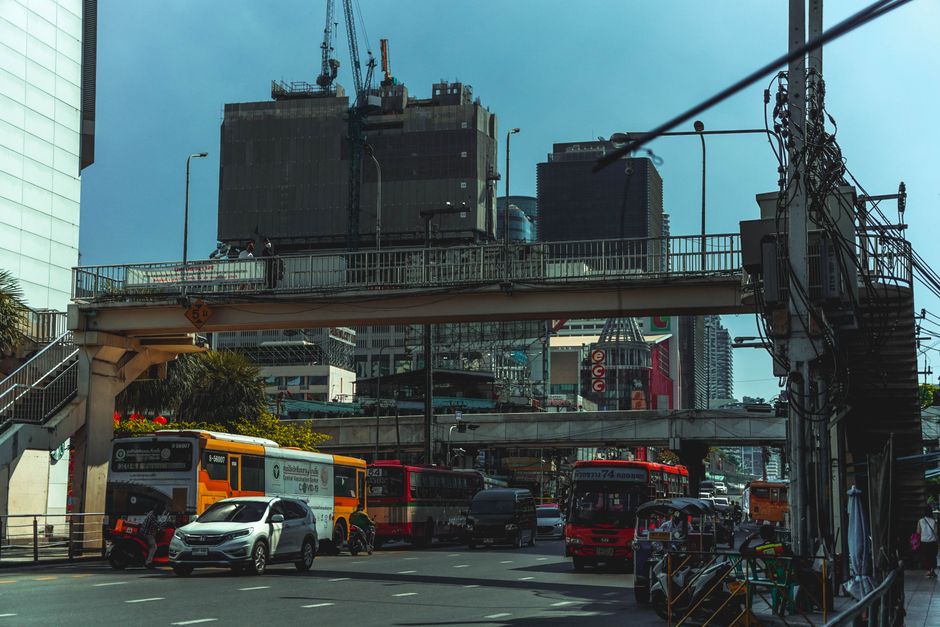
Thailand's Department of Special Investigation flagged the issue earlier this year, and city planners, tourism boards, and heritage groups are now openly saying what archivists have muttered for years: Bangkok's official image databases are riddled with duplicates, misattributed files, and AI-generated replacements that have quietly overwritten authentic photographs of the city. The scale is significant. Metadata audits conducted internally by the Tourism Authority of Thailand's digital unit found that a substantial portion of asset library entries flagged for review this year were either exact duplicates or near-matches from unrelated source material, according to a summary circulated at a March 2026 industry briefing in Ratchadaphisek.
Why does this matter now? The Chao Phraya waterfront redevelopment, a multi-billion-baht planning corridor stretching from Krung Thon Buri Bridge south toward Taksin Bridge, relies heavily on publicly sourced imagery for environmental impact assessments, community consultations, and promotional materials. When duplicate or synthetic images replace verified photographs of riverside communities, the documentary record that residents and heritage groups depend on becomes unreliable. The Bangkok Metropolitan Administration acknowledged earlier this year that its open-data image portal, last comprehensively audited in 2023, had accumulated tens of thousands of unchecked uploads.
What the Experts Are Saying
Academics at Chulalongkorn University's Faculty of Architecture, which has documented built-environment changes in the Rattanakosin historic district since 2018, have raised concerns through academic channels about the proliferation of AI-generated renderings being mistaken for actual photographs in public consultation documents. Researchers there distinguish between two categories of problem: accidental duplication, where the same photograph is uploaded under different filenames and metadata, and deliberate replacement, where synthetic images are substituted to present a cleaner or more modern version of a given site.
The second category is the more contested one. Representatives from the Thailand Creative and Design Center on Charoennakorn Road have described, at public forums, a growing demand from commercial clients, hotel groups along Sukhumvit, retail developers near Asok intersection, for image libraries that minimise legally encumbered or community-sensitive photography. That demand, the center's practitioners have argued in those forums, is pushing contractors toward AI-generated replacement images without adequate disclosure.
Apirak Boribanbutr, president of the Thai Photographers Association, has made similar points through the association's official communications, warning members about contracts that require surrendering rights to images that may later be replaced in client archives without notice. The association, based in Silom, issued a guidance note to its roughly 3,400 registered members in April 2026 specifically addressing image replacement clauses in digital-asset management contracts.
Pressure on Government Systems
The pressure is not limited to the private sector. The government's own systems are under scrutiny. The Ministry of Digital Economy and Society, which oversees national data infrastructure standards, has been working on an updated digital-asset provenance framework since late 2024. That framework, expected to apply to all ministries and to Bangkok Metropolitan Administration platforms, would require a verified origin tag on any image used in official publications or public consultation documents.
No implementation date has been publicly confirmed yet. That delay has frustrated organisations like the River of Kings Conservation Foundation, which works along the stretch of the Chao Phraya between Phra Nakhon and Thonburi, and has had to independently verify photographs submitted to planning consultations after discovering that several images circulating in one 2025 planning document depicted buildings that no longer exist at those riverbank sites.
For anyone managing an image library, whether at a Phra Athit Road gallery, a Sukhumvit serviced-apartment brand, or a government press office, archivists and legal advisors are now recommending three practical steps: conduct a full metadata audit using tools that flag perceptual hash duplicates, document the acquisition chain for every image published since 2023, and review any contract signed with a digital-asset vendor in the past 18 months for replacement and substitution clauses. The Ministry of Digital Economy's framework, whenever it arrives, will almost certainly codify those steps as mandatory. For organisations that wait until then, the compliance burden will be considerably heavier.