policy
New Bangkok Emissions Rule Cuts Factory Pollution but Leaves Out Informal Sector Workers
A citywide crackdown on industrial emissions takes effect next month, promising cleaner air for many residents but offering no protections for waste scavengers and street vendors.
How we reported this
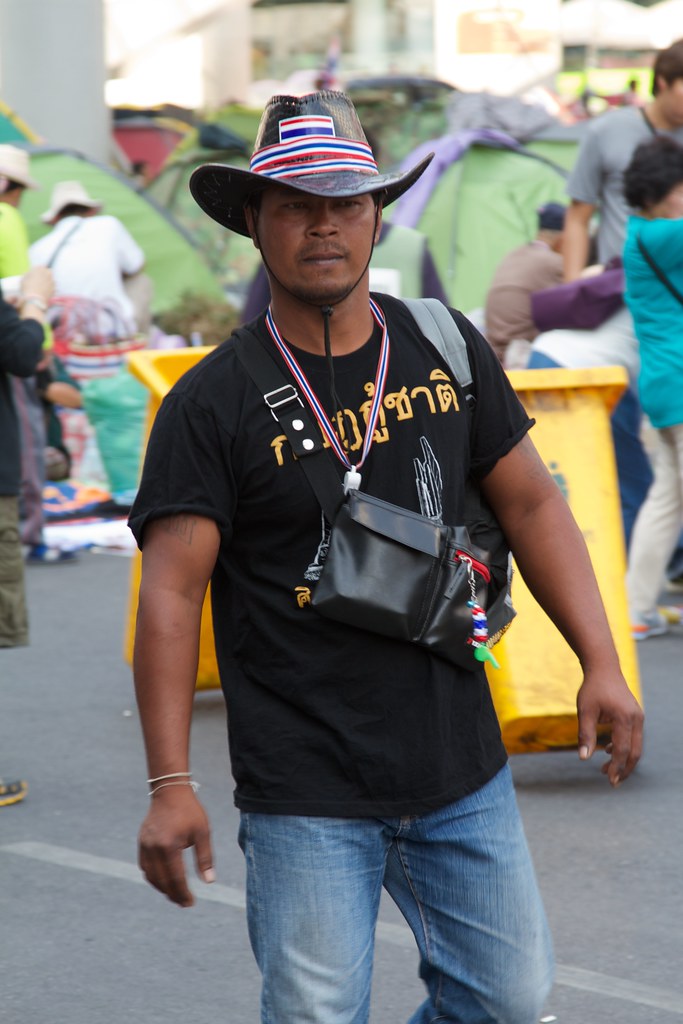
Bangkok’s new emissions regulation, set to take effect August 1, requires all factories within a 15-kilometer radius of the city center to install particulate filters and submit quarterly emissions reports to the Bangkok Metropolitan Administration (BMA). The rule, published in the Royal Gazette on June 15, targets the city’s 1,200 registered industrial sites, which the BMA says contribute roughly 40 percent of fine particulate matter (PM2.5) during the dry season. For residents in districts like Khlong Toei and Yan Nawa, where factories sit alongside apartment blocks, the policy is expected to cut PM2.5 levels by an estimated 15 percent within the first year, according to BMA environmental impact modeling.
Community divides emerge over who benefits
But the regulation does not address the estimated 80,000 informal waste workers who sort through factory trash and recycling piles across the city. A 2025 study by the Thailand Development Research Institute found that these workers, many of them migrants from Myanmar and Laos, face exposure to toxic ash and chemical residue from unregulated industrial waste-risks that remain unchanged under the new rule. “The filters capture airborne particles, but they don’t stop the solid waste that workers handle by hand every day,” said a policy analyst with the Bangkok-based advocacy group Clean Air Now. The BMA’s 2026 budget allocates 120 million baht for enforcement and monitoring of the emissions rule, but zero baht for protective equipment or health screenings for informal workers, according to the budget document published in April.
Street vendors in areas like Chatuchak and Ratchathewi also find themselves outside the policy’s scope. The regulation exempts small-scale combustion sources-including charcoal grills and diesel generators-that thousands of vendors rely on for cooking and power. A 2024 survey by the Bangkok Metropolitan Administration’s own environment office found that street-side cooking accounts for roughly 8 percent of the city’s PM2.5 during evening hours, a figure the new rule does not address. “We sell grilled pork skewers every night, and nobody from the BMA has ever told us how to make our smoke cleaner,” said a vendor in the Phra Nakhon district, who asked not to be named.
Data gaps and next steps
The BMA’s own air quality monitors, installed at 50 locations across the city in 2023, show that PM2.5 levels in the eastern industrial corridor-including Lat Krabang and Bangna-exceed the national safety standard on an average of 70 days per year. The new rule is projected to reduce those exceedances to 40 days annually, but only if factory compliance reaches 90 percent. Critics note that the BMA has not published a plan for enforcing the rule against the estimated 200 factories that operate without formal permits. “Without penalties that hurt, this is just a paper policy,” said a researcher at Chulalongkorn University’s Faculty of Environmental Science, who spoke on condition of anonymity because they work on a BMA advisory committee.
The next phase is expected to come in 2027, when the BMA has said it will propose regulations on construction dust and waste burning-two sources that officials say contribute another 25 percent of PM2.5. A public comment period on those proposals is scheduled to open in October 2026. For now, the emissions rule will be enforced by a new 30-person inspector unit inside the BMA’s Department of Environment, which began training on June 1. The city’s 2026 budget includes 15 million baht for the unit’s salaries and equipment.